Hero Fullscreen

SoundMotion: A streamlined way of companionship designed for long-distance couples.

A playful and expressive listening companion for couples apart, turning music, movement and touch into an everyday way of being together.

Final master project, individual, 2023
Designed by Zhujun Pang, supervised by Joep Frens
Eindhoven University of Technology
*This is a speculative project and I am not affiliated with Spotify.

Context
Normal speaker mode
Couple channel mode
Partner presence notification
Closing the couple channel

The Opportunity

Long-distance couples have no shortage of ways to exchange information, yet text messages and video calls still demand direct attention. The quieter cues through which intimacy is maintained—presence, mood, care, and shared routines—are much harder to carry across distance.

Rather than reproducing face-to-face communication, this project asks how an everyday music product might support a lighter form of companionship: one that can remain in the background, become explicit when desired, and fit around two different schedules.

Two long-distance partners connected through music while living in separate spaces

Researching Music as a Channel for Intimacy

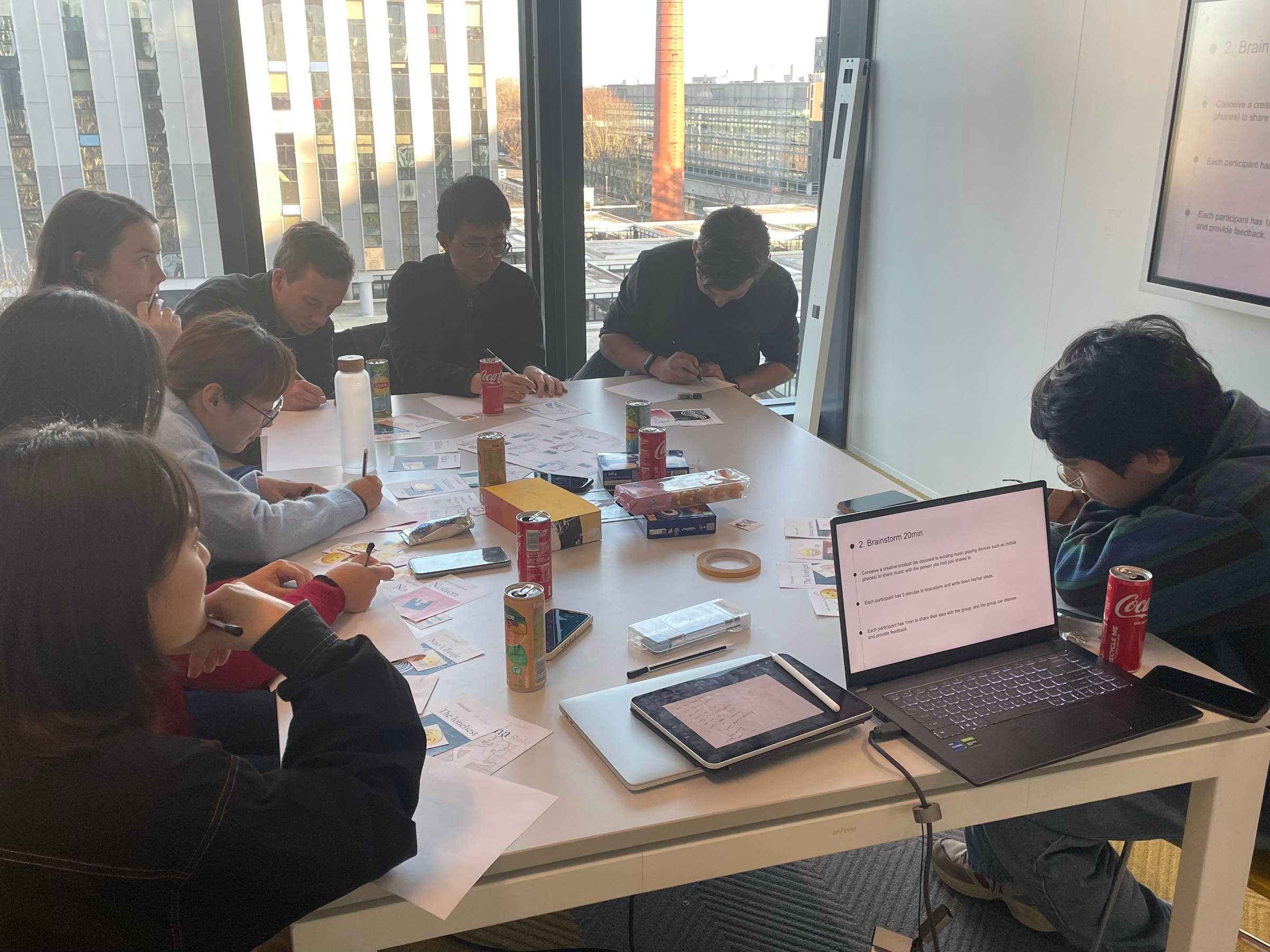
To understand how music-sharing changes across relationships, I first conducted a one-hour role-playing workshop with eight participants from four countries. It identified feedback, relationship context, and tangibility as key factors, and pointed toward romantic relationships as the most emotionally meaningful context. I then conducted five semi-structured interviews to explore how couples use music across distance. The material was transcribed, coded, and clustered through thematic analysis.

The detailed research process is available here.

Participants mapping music-sharing experiences during the exploratory workshop
Role-playing workshop, Eindhoven
Click a title above to switch views

Unveiling Key Insights: Guiding the Design

The analysis distilled three principles for the experience: shared listening should create an ambient sense of presence; emotional feedback should be tangible and lightweight; and moving into explicit interaction should remain under each person's control.

01

Music as emotional shorthand

A song can communicate mood, care, and personal context without asking either partner to formulate a message.

02

Presence at the edge of attention

Synchronous listening feels intimate because partners can sense each other while still doing separate things.

03

Agency before engagement

Different schedules make availability sensitive; connection should be noticeable without becoming an obligation.

Brainstorm

Guided by these principles, I explored three directions: extending an existing music device with physical behaviors, creating a portable connector for phone-based sharing, and designing a fixed shared speaker that could live in each partner's space. The sketches focused on how form, motion, and touch could move naturally between peripheral awareness and explicit engagement—not on styling alone.

Context

Why a Shared Ambient Speaker

Unlike a phone accessory, a paired desktop product could become a persistent point of connection and a shared listening ritual across both homes. Its stationary presence made subtle motion readable from the edge of attention, while reciprocal states and the familiar speaker archetype gave the Couple Channel a clear emotional and everyday purpose. I accepted the additional technical complexity because the central research question concerned the quality of tangible companionship—not portability.

Evaluation criterion Enhanced music device Portable connector Shared ambient speaker Selected direction
Potential to foster intimacy 3 2 5
Sustained ambient presence 3 2 5
Shared-listening coherence 4 3 5
Tangible expressiveness 4 3 5
Low interruption & user agency 3 4 4
Fit in everyday space 3 4 5
Prototype feasibility 4 5 3
Total score 24 23 32
Scoring key: 1 = weak alignment, 5 = strong alignment.

Initial Concept

The selected direction became a pair of connected desktop speakers integrated with Spotify. Each device could work independently or enter the Couple Channel for synchronized listening. The product therefore had three roles: a speaker, a tangible switch for entering and leaving the shared channel, and an ambient interface for presence and emotional feedback.

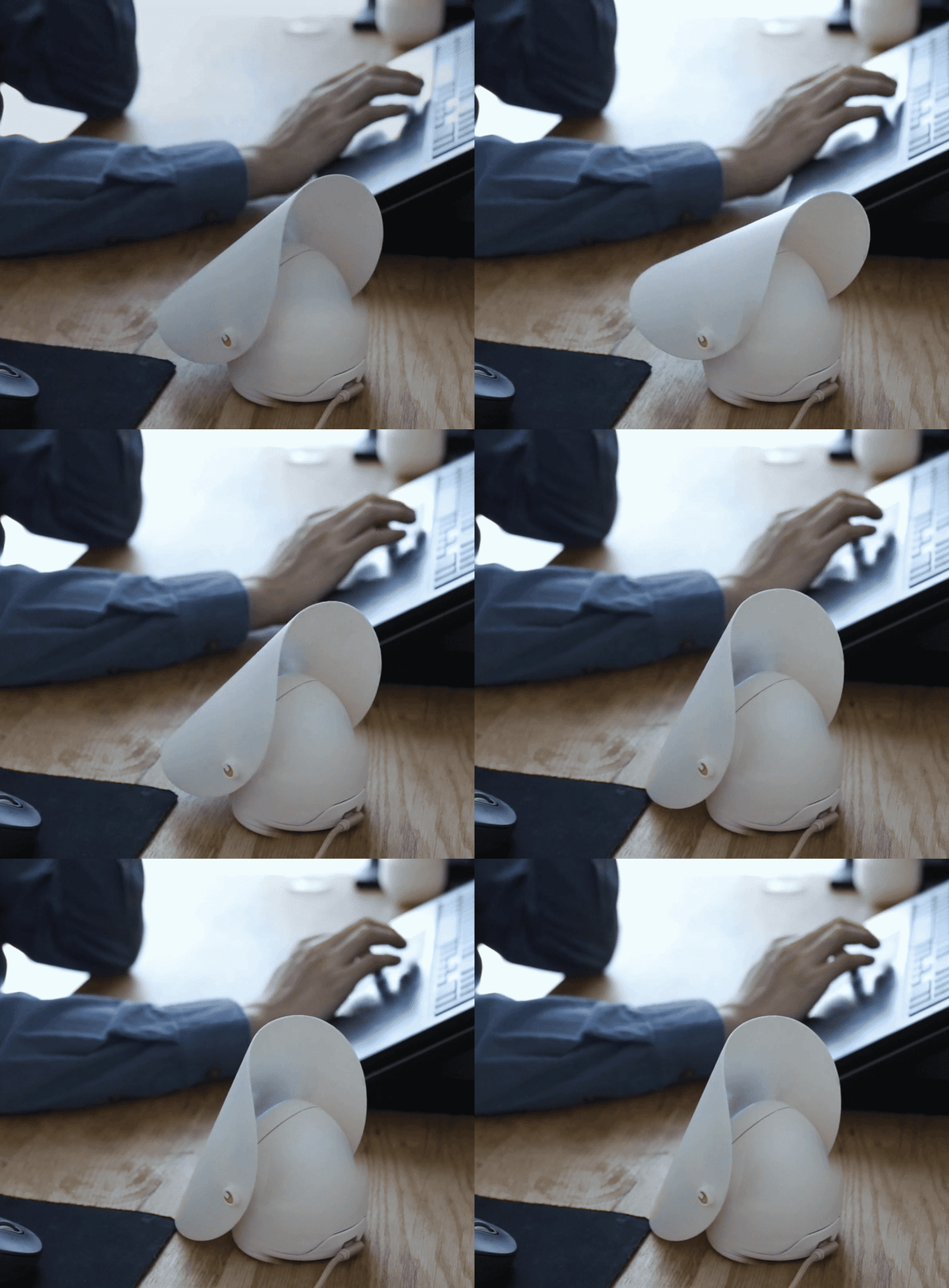
Swinging was developed as the central motion cue. Inspired by the oscillation of a bell, it became an interaction primitive rather than a literal form metaphor: a gentle swing could signal that a partner was online or had reached out. Because different schedules can make connection feel demanding, the hat also became a deliberate physical control, allowing each person to choose when to move between private listening and shared engagement.

Context Left
Animation Right

Interaction Iteration

Following a low-fi prototype test and quick evaluation, it became apparent that placing the screen at the bottom of the main body design might conflict with users' expectations, thereby increasing their cognitive load. Consequently, the final design solution opted to position the screen in a more intuitively visible location. Furthermore, drawing inspiration from cuteness and personification: the design aimed to strengthen the sense of companionship between partners through the tangible product and anthropomorphism.

Context

Final Design

SoundMotion was specifically developed as a communication system aimed at facilitating seamless interaction between long-distance couples by combining synchronized music listening and physical engagement. Each couple is equipped with a dedicated device known as SoundMotion, which enables music playback and basic physical interactions. This device is seamlessly integrated with the user's individual Spotify account, allowing them to access personalized music feeds and communication data provided by the Spotify server.

Big 1
Big 2
Small 1
Small 2
Small 3

Tangible interaction design

In contrast to conveying explicit information through text messages and social media, this form of physical interaction subtly conveys the state of one partner and provides ambiguous cues of longing and care. Instead of forcefully interrupting the user's current activities with intrusive notifications, it naturally captures attention when the user chooses to engage. Users have the freedom to switch between subtle, peripheral interactions and explicit, visible interactions through physical gestures.

Small 1
Small 2
Small 3
Small 4
Big 1

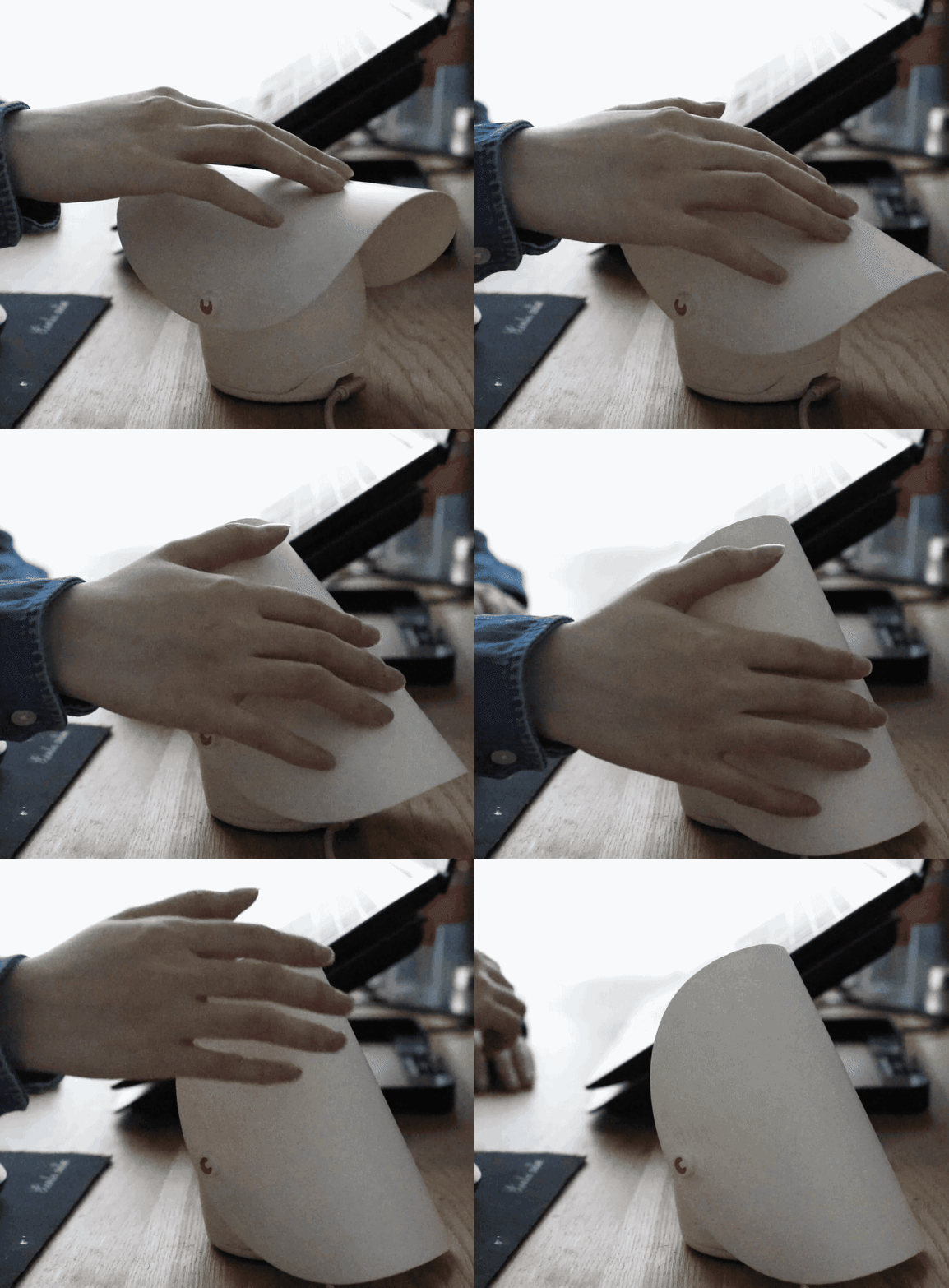
The hat as a switch & physical notification

The hat acts as a tangible switch between normal listening and the Couple Channel. When a partner is active, its gentle swinging movement communicates their presence without interrupting the room.

Opening the hat to switch listening modes
The hat gently swinging to signal a partner's presence

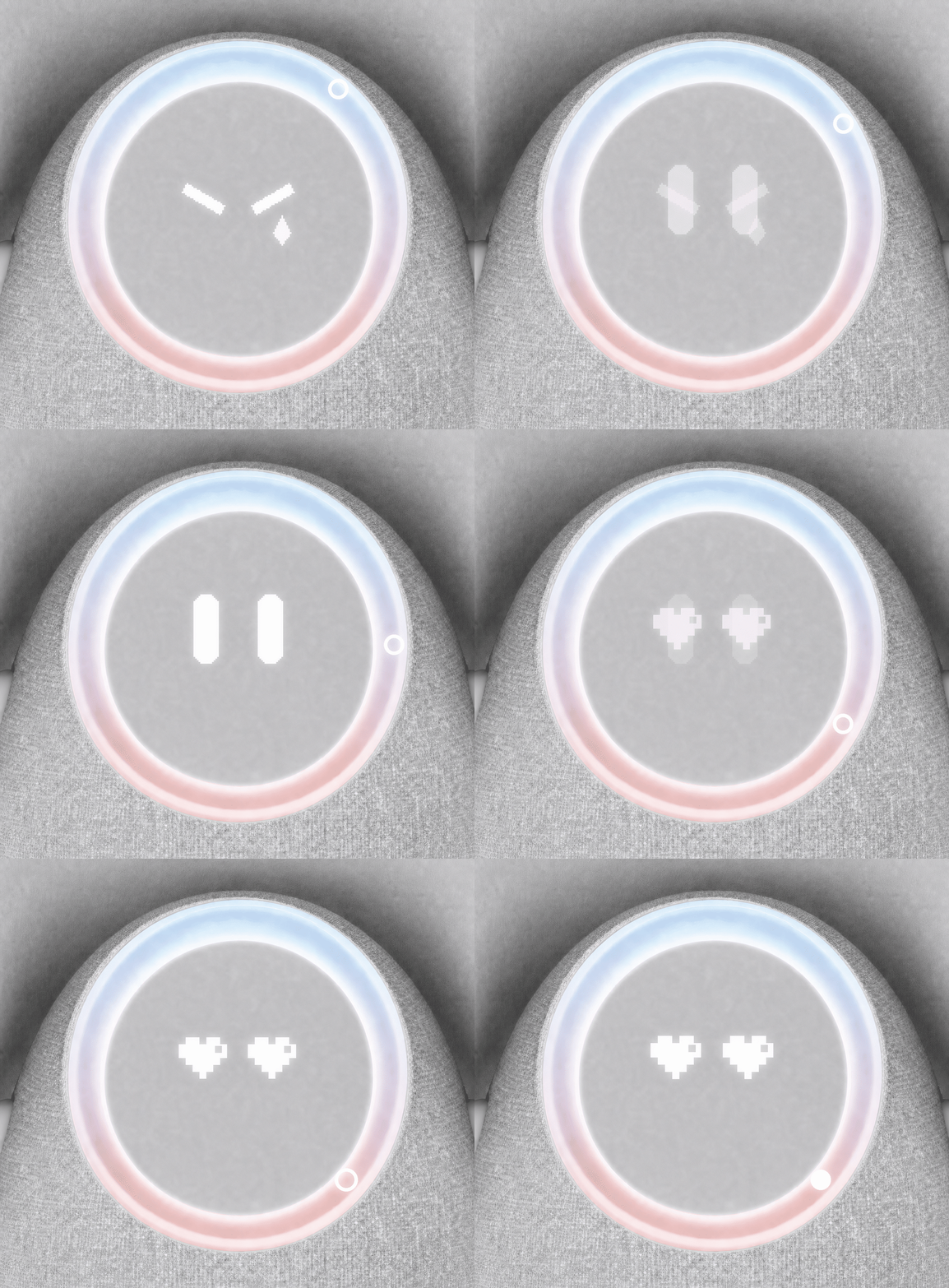
Emoji feedback through the Halo

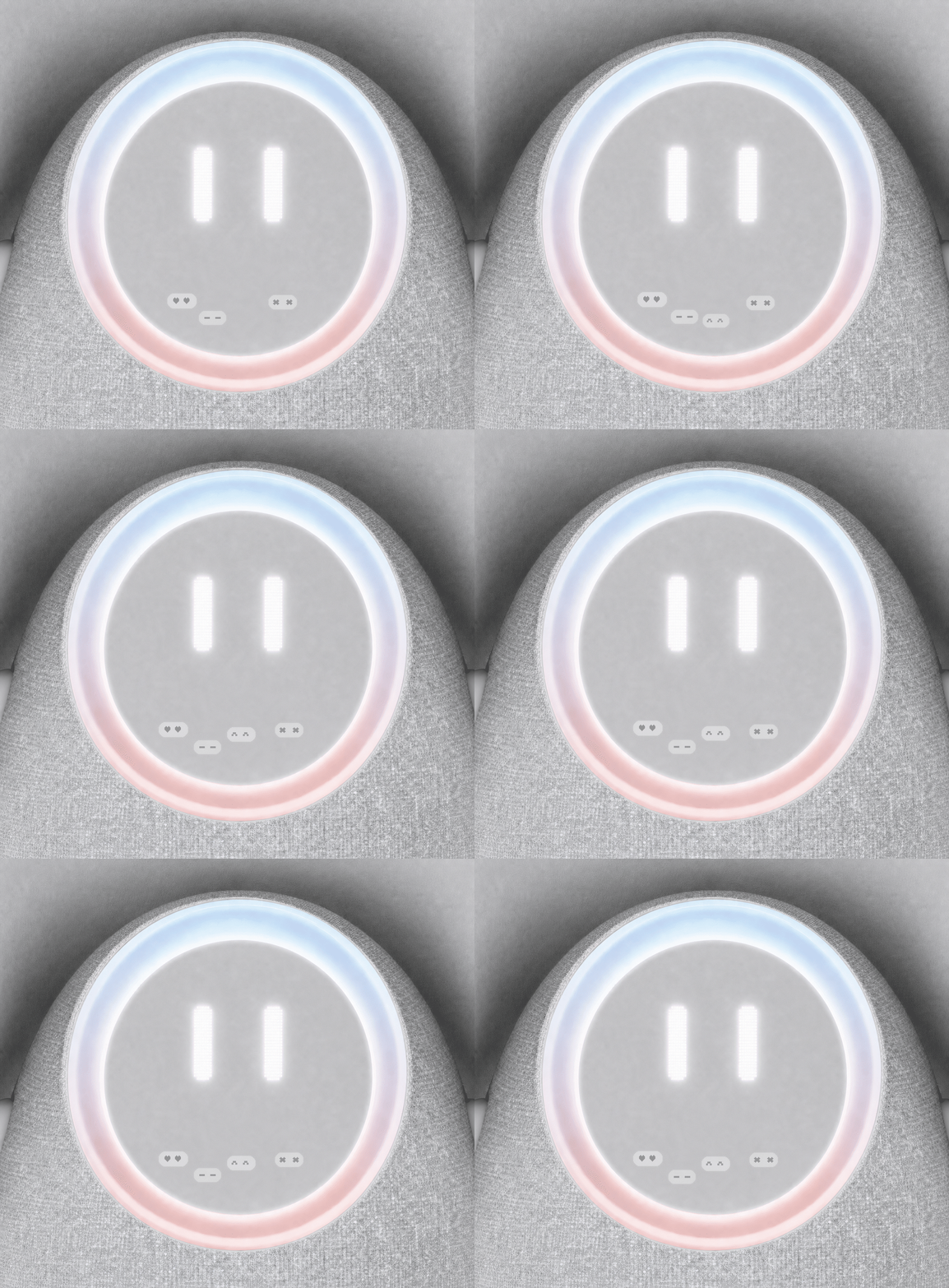
Slide along the Halo to choose an emoji that reflects the listening moment, then double-tap to send it to your partner.

Sliding along the physical Halo to choose an emoji
Emoji expression changing as the Halo is adjusted

Presence & response

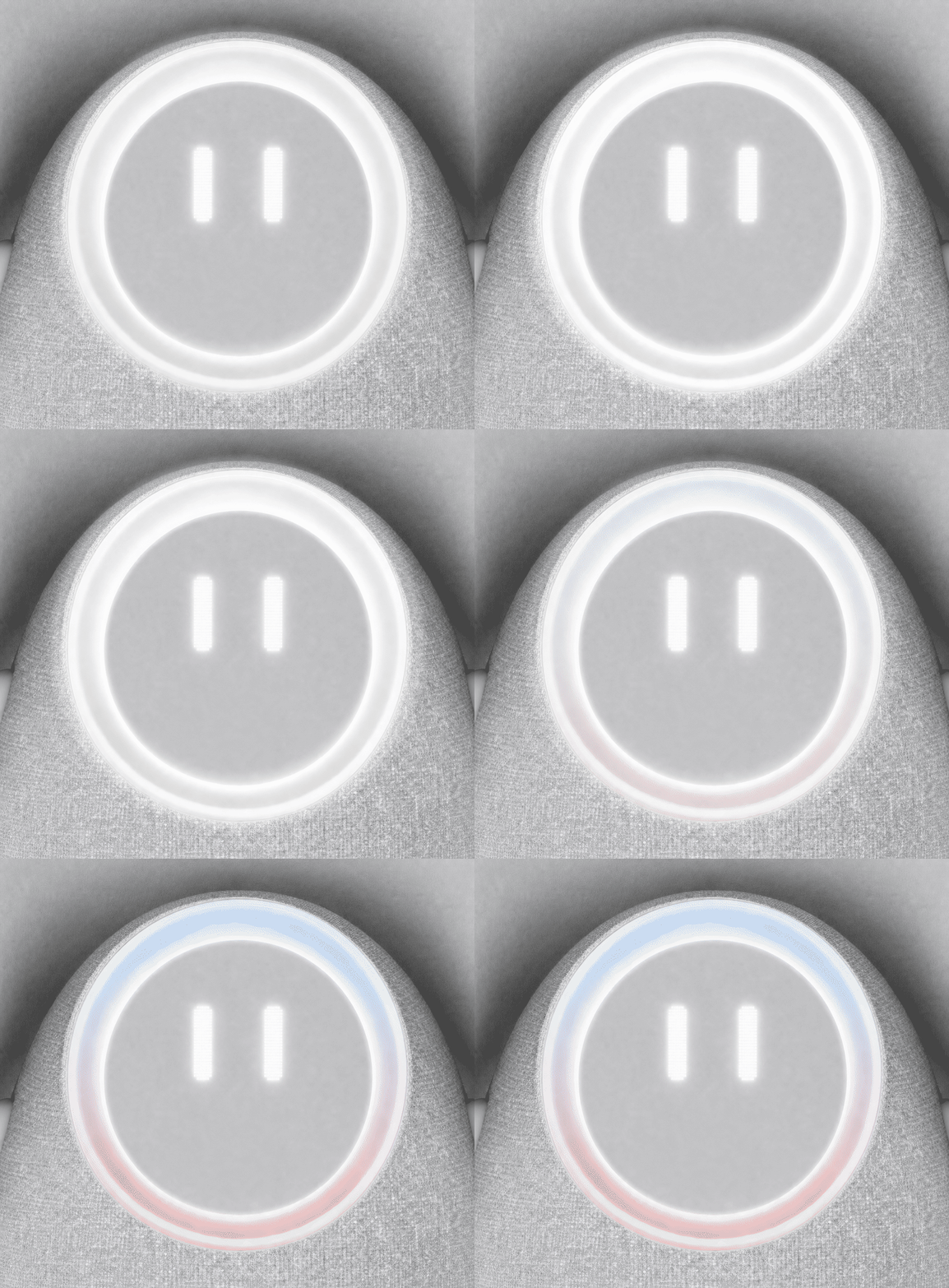
When your partner is offline, the Halo breathes in white. Once they join, it shifts into color, while incoming emojis gather at the bottom of the display.

Halo changing from white to color when a partner comes online
Incoming partner emoji appearing at the bottom of the display

Prototyping iteration for user test

Initially, I chose to use an electromagnet as the main driving component. I installed the electromagnet on the inner wall of the SoundMotion device and attached a magnet to the inner wall of the hat, as shown in the circuit diagram. However, during the actual experimentation process, I found that the electromagnet I purchased, which operates at 6-12V, had a limited magnetic field range and was unable to effectively attract and repel the magnet on the hat.

Consequently, I opted for the second solution, which involves using a servo motor to drive the swinging motion of the hat. I connected a 5V motor to the ESP8266 and used Blinker to control the motor's amplitude range, frequency, and duration of rotation.

Proto 1
Proto 2
Proto Large

Interaction logic map of the SoundMotion system

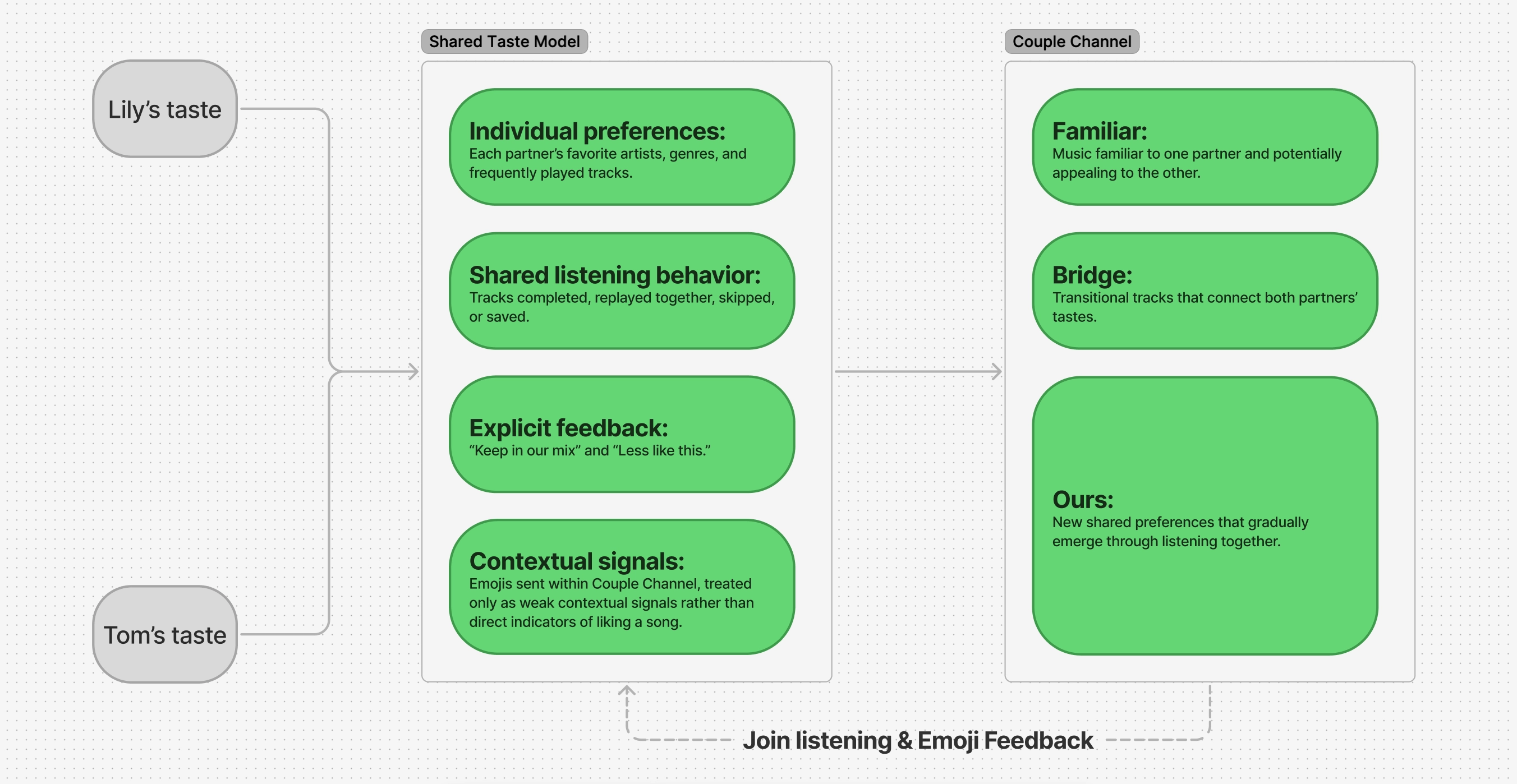
SoundMotion utilizes the ESP8266 as its hardware platform to control the product's hardware and establish a connection with the Spotify server. This enables the transfer of emoji feedback data generated during user interaction, allowing Spotify to analyze the data using the Spotify Web API and provide personalized music recommendations for couples.

SoundMotion interaction logic map
SoundMotion shared taste model

Concept video & Storyboard

Storyboard

Scenario

Scenario 1
Scenario 2
Next Project Dolce↗